
Last Verified: July 2026

Most people buying an infrared sauna spend hours comparing heaters and EMF levels — then completely overlook the infrared sauna wood. That’s backwards. Choose the wrong wood and your sauna can warp or crack within a year. Choose worse, and you’re sitting in a sealed cabin that off-gasses formaldehyde every session.
There are four real infrared sauna wood options: Western Red Cedar, Eucalyptus, Canadian Hemlock, and Basswood. Each one makes different tradeoffs. Here’s how to pick the right one for your situation — and which ones to avoid entirely.
Why Infrared Sauna Wood Matters More Than You Think
A traditional sauna splashes water on hot rocks. The wood gets wet, dries out, gets wet again. So traditional sauna builders have always obsessed over wood selection.
Infrared saunas don’t use steam — so buyers assume wood matters less. That’s the mistake. Your infrared sauna runs at 120–170°F, cycling heat dozens of times a week. The wood you’re sitting on, leaning against, and breathing around for every session is constantly heating and cooling. Poor wood warps, cracks, or worse — releases chemicals you don’t want in an enclosed space where you’re intentionally sweating.
Get this right once and your sauna lasts 15–20 years. Get it wrong and you’ll know within the first year.
Not Sure Which Wood? Answer 4 Questions
1. Allergies or chemical sensitivities? → Yes = Basswood
2. Installing outdoors or in a garage? → Yes = Western Red Cedar
3. Daily use + staying 5+ years + not moving? → Yes = Eucalyptus
4. Budget under $2,500? → Yes = Canadian Hemlock | No = Cedar
The Four Infrared Sauna Wood Types, Side by Side
| Wood | Density (kg/m³) | Natural Rot Resistance | Scent When Heated | Allergy Risk | Price Tier | Brands Using It |
|---|---|---|---|---|---|---|
| Western Red Cedar | 320–380 | ✅ Strong | Distinctive aromatic | Low–Medium | High | Clearlight, Sun Home Eclipse |
| Eucalyptus | 580–900 | ✅ Strong | Minimal/none | Low | Mid–High | Sun Home Equinox, Health Mate |
| Canadian Hemlock | 400–430 | ❌ Weak | Mild, barely noticeable | Low | Low–Mid | Dynamic, JNH, Finnmark |
| Basswood | 320–400 | ❌ Weak | None | Extremely Low | Mid | Sunlighten, Clearlight |
Density data per USDA Forest Products Laboratory (FPL-GTR-282).
Cedar — The “Ivy League” of Sauna Wood
Western Red Cedar grows slowly — and that matters. Slow growth makes the wood denser, more stable, and packed with natural oils that actively resist bacteria, mold, and sweat damage. That iconic cedar scent most people associate with “real sauna”? That comes from those same oils releasing under heat. It is not a coincidence that cedar has been the default sauna wood for decades. It earned that position.
Think of it as the Ivy League of sauna wood — prestigious, expensive, and increasingly hard to get. Processing loss is high because slow-grown wood does not come cheap, and sustainable Western Red Cedar supply is genuinely tightening. Expect the price gap between cedar and other woods to keep widening.
There’s also a supply issue worth knowing. Western Red Cedar is becoming harder to source sustainably. Health Mate notes it’s “less available and difficult to procure” — which is part of why more brands are moving to eucalyptus. Expect the price premium for cedar to keep growing.
PRL Take: Cedar is the right call if you want the traditional sauna experience and have space where the scent is welcome. If you’re putting this in a bedroom or living room, think twice. And factor in that cedar’s price premium is likely to keep rising as sustainable supply tightens.
Eucalyptus — Premium Price, Premium Reason
Eucalyptus is the densest wood on this list — up to 900 kg/m³ compared to cedar’s 380 kg/m³. That’s 2–3 times the density of softwoods like hemlock. In practice, this means it resists warping, moisture, and bacterial growth better than any other option after years of daily heat cycling.
The density is also why it’s expensive to work with. Eucalyptus is extremely hard — cutting, degreasing, and precision kiln-drying it requires specialized equipment and process control that softer woods don’t. Sun Home kiln-dries its eucalyptus to 7% moisture content before pressing the panels. That level of preparation is part of why eucalyptus saunas command a price premium on par with — or even above — cedar in high-end full-spectrum models.
Two real tradeoffs worth knowing before you buy:
No scent. Eucalyptus has minimal smell when heated. If you want the aromatic traditional sauna experience, this isn’t your wood.
It’s heavy. High density means real weight. If you’re in an apartment and might need to move in a few years, a eucalyptus sauna is significantly harder to relocate than a hemlock or basswood model. This matters more than most buyers expect — factor it in before committing.
PRL Take: Eucalyptus is the right call for homeowners who plan to use their sauna daily for 10+ years and won’t be moving it. The density advantage compounds over thousands of heat cycles in a way no other wood matches. But if you’re renting, or if your living situation might change, think hard about the weight before you buy.
Canadian Hemlock — The Most Affordable Option, With One Hidden Risk
Hemlock is the cheapest infrared sauna wood on the market. North America produces it in huge quantities, it’s a softwood that’s easy to cut and process, and that combination makes it the default for budget-friendly brands. Most infrared saunas under $2,000 use hemlock — Dynamic, JNH, and Finnmark all use it. If you’re shopping in that price range, you’re almost certainly getting hemlock.
That’s not a bad thing. At the lower temperature range most infrared saunas run at, hemlock performs fine. Minimal scent, structurally adequate, widely available. The value proposition is real.
The risk isn’t hemlock itself — it’s how it’s cut and prepared. One manufacturer notes that imported hemlock is often “cut super thin like plywood and can buckle and crack within a year.” Hemlock has zero natural rot resistance. Panels need to be thick enough and properly kiln-dried — or problems show up fast. JNH Lifestyles uses FSC-certified hemlock, which signals sourcing standards even if it doesn’t guarantee panel thickness.
PRL Take: Hemlock is the honest choice for buyers who want a functional sauna under $2,000 and don’t need premium materials. It works. Just ask the brand two questions before you buy: How thick are the panels? Was the wood kiln-dried? If they can’t answer both, that’s your signal to look elsewhere.
Basswood — The Smart Middle Ground for Sensitive Buyers
Basswood sits in the middle of the price range — more expensive than hemlock, but cheaper than cedar and eucalyptus. Within the same brand (Sunlighten, for example), the basswood version of a model is typically the hypoallergenic baseline option: no toxins, no scent, no compromise on safety — just without the premium price of cedar or the engineering cost of eucalyptus.
That positioning makes it genuinely good value if allergies or sensitivities are in the picture. It’s hypoallergenic and completely odor-free — no resins, no natural oils, no scent when heated. It’s so inert that it’s used for food-grade applications like tongue depressors, specifically because it doesn’t off-gas anything. If you or someone in your household reacts to cedar oils or finds hemlock’s mild scent irritating, basswood is the clean answer.
The tradeoff is durability. Basswood is softer with no natural bacteria resistance. It handles indoor infrared sauna use fine — but it needs regular cleaning, and it won’t hold up as long as eucalyptus under daily heavy use.
PRL Take: Basswood is the right call for allergy-sensitive buyers who don’t want to pay for cedar or eucalyptus. If the choice is between a scent reaction every session or a slightly softer wood, that’s not a real choice. Go basswood, maintain it properly, and you’ll be fine.
Which Wood Is Right for You? Match Your Situation
| Your Situation | Best Choice | Why |
|---|---|---|
| Installing outdoors or in a garage | Western Red Cedar | Only wood with enough natural rot resistance for outdoor exposure |
| Budget-conscious, indoor, moderate use (2–3x/week) | Canadian Hemlock | Functional and widely available at lower price points |
| Daily use, long-term investment, not moving soon | Eucalyptus | Highest density, handles thousands of heat cycles better than any other option — but it’s heavy |
| Renting, apartment, or might move in a few years | Hemlock or Basswood | Lighter and easier to relocate than eucalyptus or cedar |
| Allergies, asthma, or chemical sensitivities in the household | Basswood | Zero resins, zero scent, hypoallergenic — no second choice here |
| Installing in bedroom or shared living space | Eucalyptus or Basswood | No scent when heated or at rest |
| Want the traditional aromatic sauna experience | Western Red Cedar | The scent comes from the wood itself — nothing else replicates it |
4 Things Brands Won’t Tell You (Avoid These Mistakes)
1. Engineered wood / plywood — don’t even consider it.
If a brand uses plywood, MDF, or any engineered wood panel, stop reading their spec sheet and move on. These materials use urea-formaldehyde or phenol-formaldehyde resins as binders. At 120°F+, those resins off-gas formaldehyde into a sealed space where you’re intentionally sweating. You’re supposed to be detoxing. Don’t buy a formaldehyde chamber. Ask brands directly: “Is this 100% solid wood?” If the answer is anything other than a clear yes, walk away.
2. Pine and spruce — the cheap trap.
Some budget saunas use pine or spruce. They look fine initially. Then the heat comes on and the resin seeps out — sticky, difficult to clean, and for some people, irritating to breathe. Pine also has poor dimensional stability in heat cycling, meaning cracking and warping happen faster than with any of the four main options. Not worth the savings.
3. Thin hemlock panels — the most common quality issue.
This one is hidden and almost no buyers check for it. Hemlock panels should be at least ¾” thick to hold up to regular use. Panels cut thinner than that — sometimes as thin as plywood — buckle and crack within a year. Ask the brand specifically about panel thickness. If they don’t know, that’s your answer.
4. Cedar’s lesser-known allergy risk.
Cedar contains Thujaplicin — the natural antifungal compound that gives cedar its scent and rot resistance. For most people, this is harmless or pleasant. But for a subset of people, it’s a genuine allergen. If you test a cedar sauna and find yourself with irritated eyes, a scratchy throat, or headaches, that’s likely a cedar sensitivity. Switch to hemlock or basswood — don’t push through it hoping it gets better.
One More Option: Thermo-Treated Wood
Some brands offer thermo-treated (heat-treated) versions of hemlock or other woods. The process heats the wood to high temperatures without chemicals, changing its cellular structure to improve moisture resistance and dimensional stability.
The result: a hemlock that behaves more like cedar in terms of rot resistance, without the scent or cost. It’s a legitimate upgrade over standard hemlock, and worth asking about if you’re leaning toward a hemlock sauna but worried about long-term durability.
The catch: not many brands publish specifics on their treatment process. If a brand mentions thermo-treated wood, ask what temperature and duration — that determines how much the properties actually changed.
Wood species matters. But how the wood is prepared matters just as much.
Kiln-drying removes excess moisture from the wood before it goes into the sauna, stabilizing it for heat cycling. Brands that skip this step — or do it poorly — see warping and cracking regardless of species. When evaluating a sauna, ask: “Is the wood kiln-dried?” and “What’s the moisture content after drying?” Sun Home specifies 7% moisture content for its eucalyptus panels. Most brands don’t publish this at all.
The other question worth asking: VOC testing. Sun Home publishes AIHA-accredited VOC testing showing 27 µg/m³ for its eucalyptus models. Almost no other brand does this. It’s not proof that other brands have a problem — but it’s a transparency gap worth noting if indoor air quality matters to you.
Bottom Line on Infrared Sauna Wood
If you only remember one thing from this guide, remember this: heater technology determines how your sauna performs, but the wood determines how it feels after ten years. Most buyers compare the first and ignore the second.
Allergies → Basswood, no exceptions | Daily heavy use, staying put → Eucalyptus | Traditional scent + outdoor → Cedar | Budget under $2,000 → Hemlock (ask about panel thickness) | Engineered wood → Walk away
Ready to Buy? Match Your Wood to the Right Brand
| You Want… | Best Brand Match | Why |
|---|---|---|
| Kiln-dried eucalyptus + VOC testing | Sun Home Equinox | Only brand publishing both kiln-dry specs and AIHA-accredited VOC data |
| Basswood for allergies or sensitivities | Sunlighten | Offers basswood across multiple models, including full-spectrum options |
| Budget hemlock under $2,000 | Dynamic | FSC-certified hemlock, widely available, entry-level price point |
A Brand That Gets the Wood Right
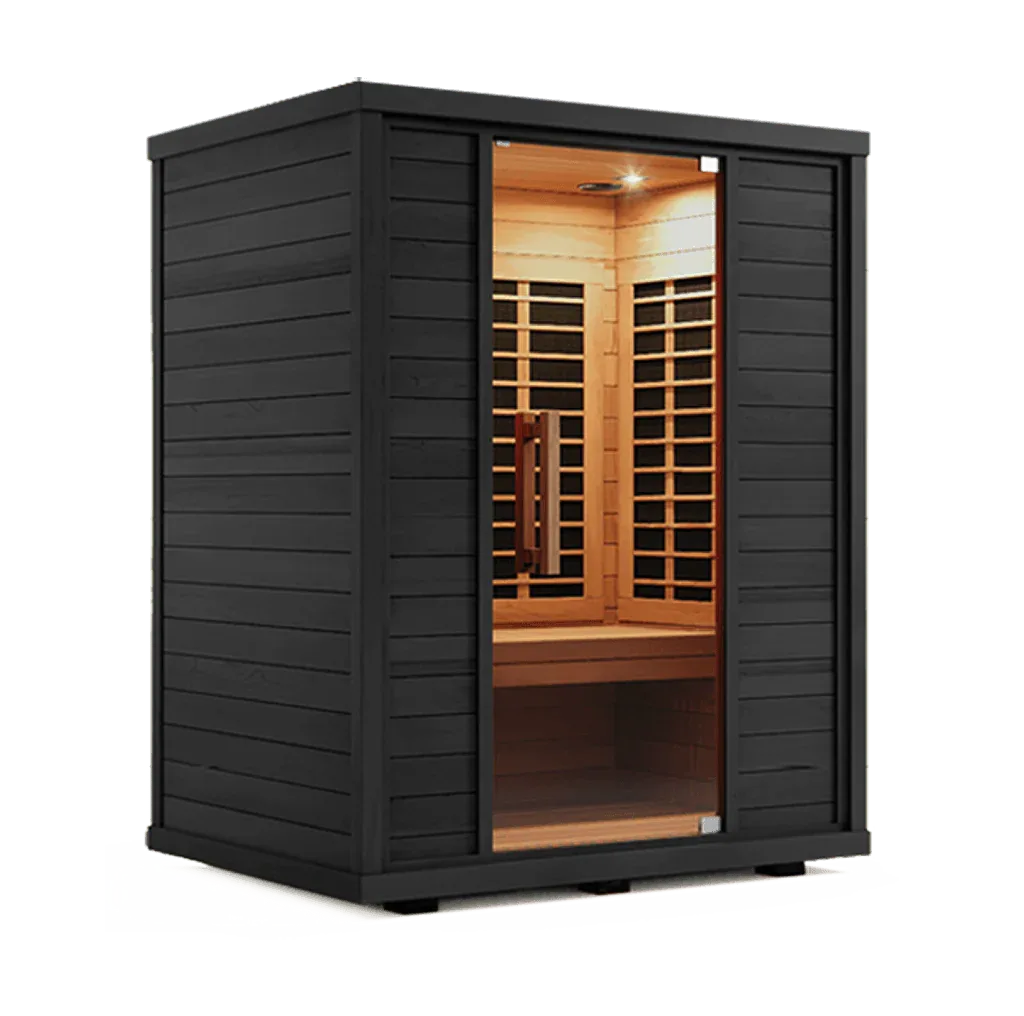
If eucalyptus ticks your boxes — kiln-dried, VOC-tested, and built for daily use — the Sun Home Equinox is the clearest example of that standard done well. Kiln-dried to 7% moisture content, with published AIHA-accredited VOC testing (27 µg/m³). Most brands don’t publish either of those numbers.
Kiln-Dried Eucalyptus · VOC Tested
FAQ
1. What is the best infrared sauna wood?
It depends on your use case — eucalyptus for durability, cedar for scent, basswood for allergies, hemlock for budget.
Eucalyptus is the strongest long-term choice for daily users at 580–900 kg/m³ density. Cedar is the traditional premium option with natural antimicrobial oils. Basswood is the only genuinely hypoallergenic option. Hemlock works for moderate use at lower price points, if panel thickness and preparation are adequate.
2. Is cedar or eucalyptus better for an infrared sauna?
Eucalyptus is denser and more durable long-term; cedar has the traditional scent and aesthetic.
Eucalyptus (580–900 kg/m³) is significantly denser than cedar (320–380 kg/m³), making it more resistant to warping over thousands of heat cycles. Cedar’s advantage is its natural aromatic oils and the classic sauna experience. For daily use over a decade, eucalyptus holds up better. For the traditional scent, nothing replaces cedar.
3. Can infrared sauna wood release harmful chemicals?
Yes — if it’s engineered wood or contains resin-heavy species like pine.
Plywood, MDF, and engineered wood panels use formaldehyde-based binders that off-gas under heat. Pine releases sticky resins when heated. Solid cedar, eucalyptus, hemlock, and basswood — properly kiln-dried — don’t have this problem. Ask any brand directly whether their panels are 100% solid wood.
4. What wood should I choose if I have allergies?
Basswood — it’s the only infrared sauna wood that’s genuinely hypoallergenic and odor-free.
Cedar contains natural oils (Thujaplicin) that are allergens for some people. Hemlock and eucalyptus are generally low-risk. Basswood has no resins, no scent, and no known allergens — it’s used in food-grade applications for exactly this reason.
5. Should infrared sauna wood be sealed or treated with finish?
No — leave it untreated. Sauna wood is designed to breathe naturally under heat.
Applying varnish, lacquer, paint, or sealants to sauna wood is a mistake. These coatings can’t handle repeated heat cycling — they’ll crack, peel, and potentially release chemicals when heated. The wood’s natural surface is what you want. Clean with a damp cloth only, and let the heat do the maintenance work.
- Best Infrared Saunas 2026 — full rankings covering all major brands and materials
- What to Know Before Buying an Infrared Sauna — 9 lessons from real owners before you commit
- Infrared Sauna VOC Emissions — what off-gassing means and which brands actually publish data
- Sun Home Equinox Review — kiln-dried eucalyptus with AIHA-accredited VOC testing published
- Health Mate Sauna Review — Indonesian Mahogany in an unusual wood category
- Infrared Sauna EMF Explained — the other key safety spec to check before buying