
Last Verified: June 2026
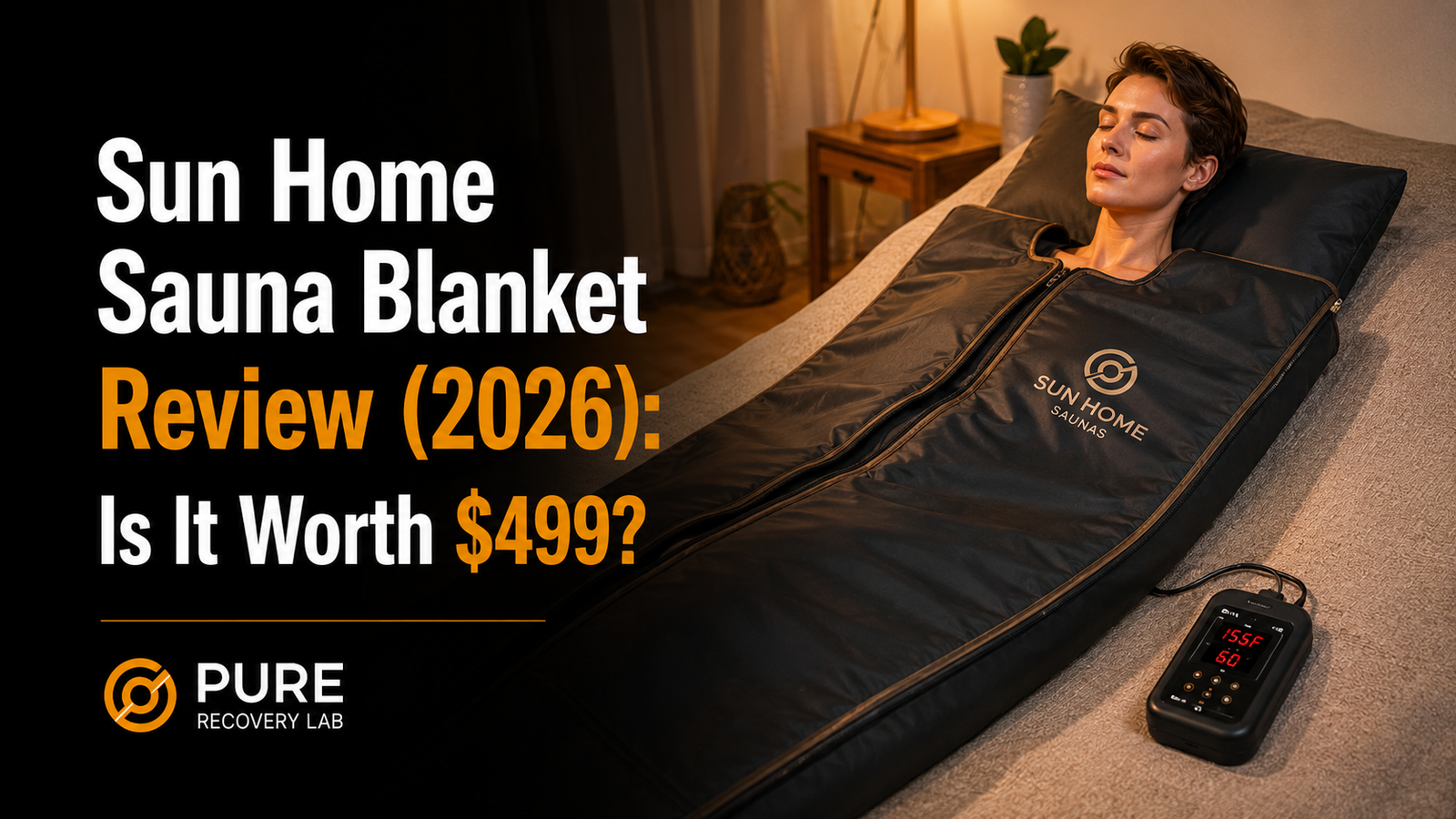
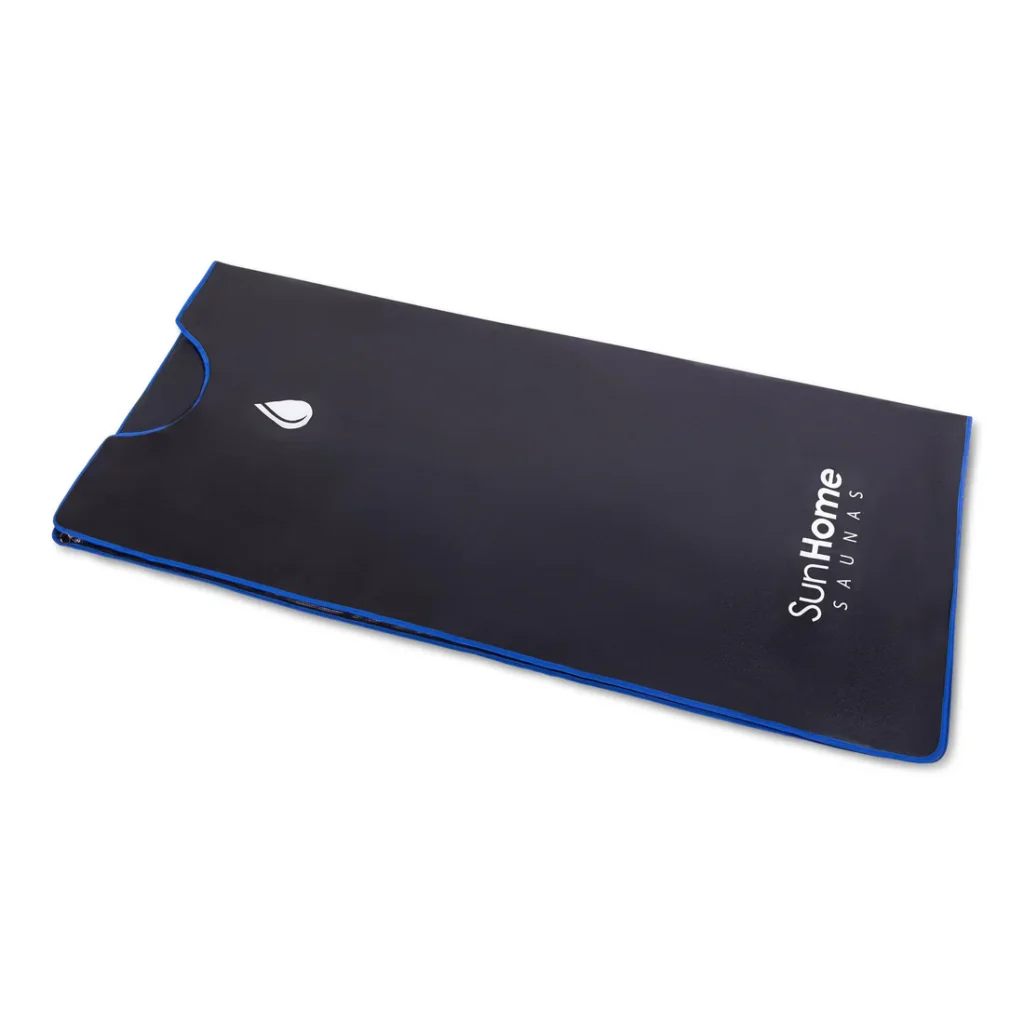
The Sun Home Sauna Blanket is a portable infrared sauna — easy to use, easy to store, capable of reaching 167°F, and used by celebrities and influencers as a compact alternative to a full sauna cabin.
It heats up fast and plugs into a regular wall outlet — no electrician, no special circuit. The catch is EMF: Sun Home backs its cabin saunas with a published, accredited-lab report, but for this blanket, all you get is marketing language — “completely free of any harmful EMF” on the sales page, just “Low EMF” in the actual manual. At $499, it’s a low-commitment way to try infrared heat, not a stand-in for a full sauna cabin.
167°F Max · No Published EMF Lab Report
Why Blankets Like This Exist — and Why They Caught On
Quick clarification first: a sauna blanket and a full sauna cabin do the same thing. Same far-infrared heat. Same idea — warm your body, not the air around you. The only real difference is the shape it comes in. A cabin builds a room around the heat. A blanket just wraps it around you.
So why did blankets take off? Three simple reasons.
Price. $499 versus $6,000+ for something like the Equinox.
Storage. Folds flat. Fits under a bed or in a closet. No spare room needed.
Setup. Plug it into any regular outlet. No electrician, no special circuit — unlike full-spectrum cabins, which often need a 20A line.
Celebrity buzz hasn’t hurt either. Sun Home’s marketing leans on names like NBA All-Star Paul George and “Yoga Girl” Rachel Brathen, plus shoutouts from Rolling Stone, Variety, and WWD. That’s the brand’s own press, not third-party proof — but it’s part of why this feels like a mainstream product, not a gimmick.
None of that excuses the EMF gap we’re about to get into. But it’s the honest reason people actually buy these things: it’s cheap, it’s easy, and it fits in an apartment.
Sun Home Sauna Blanket: Real Specs (Verified Against Multiple Sources)
These specs are pulled directly from Sun Home’s official product page and a major authorized retailer listing. Where the two sources disagree, both numbers are shown rather than guessed at.
| Spec | Value | Source |
|---|---|---|
| Temperature range | 95°F – 167°F (35°C – 75°C) | Sun Home official |
| Heat-up time | 10–15 min typical / ~30 min to max | Manual / GGR |
| Session length | 30–60 min, auto shut-off | Sun Home official |
| Power draw | ~500W, 4.5A at 110V | Owner’s manual |
| Voltage | 100–120V (US) / 220–240V (EU/UK) | Sun Home official |
| Unfolded size | 71″×63″ (180×160cm) per Sun Home’s official site and GGR’s own spec table — vs. 71″×71″ (180×180cm) per the owner’s manual and a retailer listing. Genuinely split, not resolved. | Official site + GGR vs. manual + retailer |
| EMF | “Low EMF” (manual) up to “free of EMF” (marketing) — no mG published | See below |
Marketing claim worth challenging: Sun Home’s blanket page makes three different EMF claims in three different spots. The spec sheet says “Low EMF.” The product description says “free of any harmful radiation or EMF.” The feature list says “lowest EMF in the industry.” Three claims, three strengths, zero links to a test report.
Now compare that to the manual. The actual owner’s manual — the document Sun Home is most careful about, legally — only ever says “Low EMF.” Nothing about “free of” anything. Nothing about “lowest in the industry.” That gap matters: the boldest claims live in the sales copy, not in the paperwork that comes in the box.
Here’s why that’s worth noticing. Sun Home knows how to test EMF properly — they just don’t do it for this product. For their cabin saunas (Equinox, Solstice), they run a whole public page on it: a named lab (Vitatech Electromagnetics), a specific instrument (fluxgate magnetometer), a report number (VTE-3534), a real figure — 0.5 mG at seated distance, tested January 2025. That’s a citable, accredited result. For the cabin line.
The blanket page links to none of it. So this isn’t “the whole industry skips testing” — it’s one company testing one product line and not the other. Even its own marketing and its own manual don’t agree with each other. The closest thing to an independent number anywhere: one blogger self-tested 0.4 mG with a personal Trifield TF2 meter. Not a lab. Not accredited. But it’s the only third-party reading that exists.
PRL take: Sun Home publishes real, third-party EMF reports for its full-size saunas. For this product, the same company drops to a vague marketing line — “lowest EMF in the industry” — no number, no lab, no report. Apparently EMF transparency is optional once the product folds up.
Heat Performance: The One Number Worth Knowing
Quick note on those minutes-to-heat numbers above. They’re not contradicting each other. One is general warmth. The other is pushing all the way to the 167°F ceiling. Two different benchmarks, that’s all.
The more useful number comes from independent reviewer Michael Kummer, who owns both a full-spectrum cabin sauna and this blanket. He notes blankets generally run at 84–88% infrared emissivity, versus 95–99% for cabin-style heaters. The heat is real. It’s just less efficient than a full sauna’s panels at the same setting.
What 30 Minutes Inside It Actually Feels Like
The first few minutes are the easy part. You zip in, it’s warm but not much more than a heated blanket. GGR’s tester used the time to put on her favorite show — this is very much a “lying on the couch” experience, not a sauna-room ritual.
Somewhere around the 15–20 minute mark, the sweating starts in earnest. This is also when the small annoyances show up: if you’re using the bamboo insert, mindbodygreen’s reviewer found the velcro closure genuinely hard to pull apart once your hands are sweaty — something to know before you’re trying to adjust it mid-session, not after.
The last stretch is where opinions split. One GGR tester ran a full 45-minute session and described feeling mildly claustrophobic in the final 10–15 minutes — the combination of being zipped in, the bamboo insert adding weight, and sustained heat. Not everyone reports this. But if small, enclosed spaces bother you even a little, it’s worth starting with a shorter session before committing to the full 60 minutes.
What people consistently say afterward: it’s more relaxing than expected, heart rate elevated slightly, and the kind of session you can disappear into with your phone or a show rather than having to just sit with your thoughts.
What Does It Cost to Run?
At 500W, a single session costs a small fraction of what a full cabin sauna draws — published estimates for similar-wattage infrared blankets put a typical hour-long session at roughly $0.15–$0.25 depending on local electricity rates. That’s a rough industry estimate, not a measured figure for this specific unit. For an exact number based on your own utility rate and session length, run it through our electricity cost calculator — it’ll also show you how that compares to running a full sauna like the Equinox.
What You Actually Feel vs. What’s Claimed
| What You Actually Feel | Best For | The Catch |
|---|---|---|
| Direct, localized body heat — strong at the heating panel, weaker at the extremities | Apartments, small spaces, $1,500+ saved vs. a cabin sauna | Not a sauna environment — no surrounding heated air, no room to move |
| Quiet, no fan noise, minimal setup | Pre/post-workout quick sessions under 30 minutes | Celsius-only display (per GGR) — a mental conversion step for US users |
Sauna Blanket vs. Full Sauna: The Real Tradeoff
| Feature | Sun Home Sauna Blanket | Sun Home Equinox (Full Sauna) |
|---|---|---|
| Heat type | Direct contact heat | Surrounding air + radiant panels |
| Max temp | 167°F (75°C) | 165°F (independently verified) |
| Heat-up time | 10–30 min | 35–45 min |
| EMF data | Brand claim only, no published mG | 0.3–0.5mG, Vitatech-tested, Jan 2025 |
| Price | ~$499 | From $6,099 |
| Space required | None — folds flat for storage | Dedicated room/closet footprint |
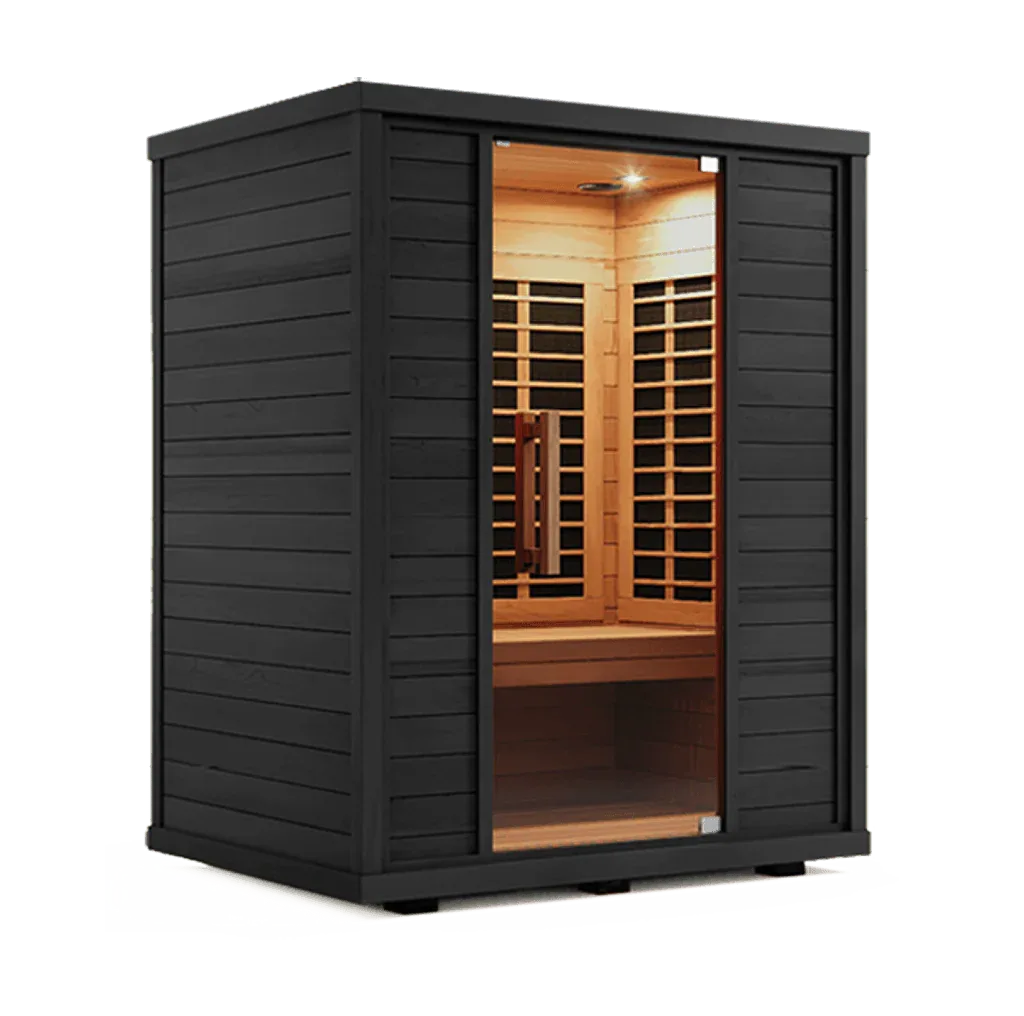
The honest comparison here: the Equinox has third-party EMF verification the blanket doesn’t, but it costs roughly 12x more and needs a permanent footprint. Read the full Sun Home Equinox review if EMF verification is a hard requirement for you.
Community Sentiment Audit
We leaned on independent reviews from named publications instead of Sun Home’s own site reviews. There’s a reason for that: Sun Home only sells the blanket through its own website. Garage Gym Reviews noted there’s nothing on Amazon or Trustpilot to cross-check against. A few patterns emerged:
- The velcro closure is genuinely contested. mindbodygreen’s reviewer found it hard to use; Fit&Well’s reviewer called it easy. Two independent testers, two opposite conclusions — likely comes down to hand strength or how tightly it’s fastened, but worth knowing both opinions exist.
- The 60-minute timer isn’t 60 minutes at temperature. The timer starts counting from power-on, not from reaching your target heat. Since heat-up takes 10–15 minutes, mindbodygreen’s reviewer pointed out the realistic time actually spent at your set temperature is closer to 45 minutes — a detail Sun Home’s marketing doesn’t spell out.
- No major safety or build-quality complaints turned up across the independent reviews we checked — GGR, mindbodygreen, and Fit&Well all reported smooth assembly and no malfunctions during testing.
Why Buyers Still Love It, EMF Gap Aside
Despite the unverified EMF claims, the blanket consistently earns a permanent spot in people’s routines rather than getting abandoned. Michael Kummer kept using his alongside a full cabin sauna he already owned, specifically for moments when setting up the cabin wasn’t practical. For a $499 product competing against $5,000+ cabins, that’s a meaningfully different outcome than “cheap alternative people regret.” The pattern across reviews: people keep blankets for convenience and speed — a realistic reason to buy one, just not a reason to accept unverified EMF claims along with it.
Who Should Buy This — and Who Shouldn’t
The complaints that surface mostly share one thread: expecting a one-to-one sauna substitute. Here’s the fuller breakdown:
| Buy It If You’re… | Skip It If You’re… |
|---|---|
| In an apartment with no room for a cabin sauna | Planning daily, long (45–60 min) sessions — a cabin will hold up better long-term |
| Testing whether infrared heat therapy fits your routine before a bigger purchase | Specifically buying for verified low-EMF exposure — this product hasn’t published that data |
| Budget-capped under $500 for any infrared product | Taller than 6 feet — GGR’s own review lists this as “less ideal for taller individuals” given the 71″ length |
Pro Tip: If EMF exposure is a concern for you, the field is concentrated near the power cord and remote control connection point — not evenly across the blanket. Keeping that section away from direct skin contact during a session reduces your closest-range exposure, regardless of what the brand’s marketing claims.
Editorial Integrity Note
We did not physically test this product. This review is built entirely from cross-referencing Sun Home’s official owner’s manual, its current product page, a verified authorized retailer listing, and published independent reviews from Garage Gym Reviews and michaelkummer.com. On size, sources genuinely split down the middle — the manual and one retailer say one number, the official site and GGR’s own independent spec table say another — so we reported both rather than picking a side.
PRL Verdict
Best for: apartment dwellers, budget-capped buyers, and anyone testing whether infrared heat therapy fits their routine before a bigger purchase.
Not for: anyone whose buying decision depends on verified low-EMF exposure, or daily long-session users who’d be better served by a full cabin sauna.
Bottom line: The Sun Home Sauna Blanket is a legitimate, low-cost way to try infrared heat therapy — fast heat-up, real sweat response, no electrical setup needed — but its EMF claims are unverified, and that’s notable specifically because Sun Home does publish accredited third-party EMF testing for its cabin saunas. The disclosure standard exists at the company; it just hasn’t been extended to this product.
167°F max
165°F verified
(As an Amazon Associate and Impact affiliate, we may earn from qualifying purchases.)
Safety & Usage Notes
Per Sun Home’s official owner’s manual, consult a doctor before use if you have any of the following:
| Anhidrosis, fever, headache, nausea | Heart disease, abnormal blood pressure, defibrillator/implantable device |
| Pregnancy or breastfeeding | Diabetes, cancer, osteoporosis |
| Skin disease, burns, or reddening | Recent surgery, broken bones, metal/breast implants |
| GI or splanchnic disease | Mental illness, or any condition heat could worsen |
Don’t use with infants, children, or anyone unable to exit the blanket independently. Skip jewelry or metallic items during a session (burn risk), and don’t apply ointments beforehand.
Pro Tip: Sun Home’s manual recommends starting at 50°C for 20 minutes and adding 10 minutes per session until you reach 50–60 minutes — a sensible ramp-up if you’re new to infrared blankets, rather than jumping straight to the 167°F max setting.
Voltage & Electrical Warning
US version is 100–120V only; EU/UK version is a separate 220–240V SKU. Do not use extension cords, transformers, or converters between versions — this is a 500W heating device, and mismatched voltage is a fire risk, not just a warranty issue.
FAQ
Does the Sun Home sauna blanket have EMF?
Yes — and the brand hasn’t published a lab number to quantify it.
Any 500W AC-powered heating device produces some electromagnetic field. Sun Home markets the blanket as “completely free of any harmful EMF,” but no independent accredited lab has published a milligauss (mG) reading to verify that claim — notably, even though Sun Home does publish exactly this kind of report for its cabin saunas.
How long does the Sun Home sauna blanket take to heat up?
About 10–15 minutes to feel hot; up to 30 for the max setting.
Sun Home’s own owner’s manual states it takes approximately 10–15 minutes for the blanket to get hot at typical settings. Garage Gym Reviews’ independent test found it took closer to 30 minutes specifically to reach the maximum 167°F (75°C) setting — not a contradiction, just a different benchmark (general warmth vs. pushing to the top of the range).
Can a sauna blanket replace a full infrared sauna?
Not fully — it’s a different intensity, not a smaller version of the same thing.
A blanket delivers direct contact heat at lower emissivity (84–88%) than a cabin sauna’s panels (95–99%), and there’s no surrounding heated air or room to move. It’s a reasonable lower-cost entry point, not a one-to-one substitute.
Is the Sun Home sauna blanket worth $499?
Yes for occasional use and small spaces; no if verified EMF is a requirement.
For occasional use, small spaces, or testing infrared therapy before a bigger purchase, GGR’s independent test scored it 4.5/5. For daily long sessions or anyone requiring verified low-EMF exposure, a full cabin sauna with published third-party testing is the better fit.
Related Reading
- Sun Home Equinox Sauna Review — the full-sauna upgrade path, with independently verified EMF data
- Sun Home Equinox EMF Levels — see what verified third-party EMF testing actually looks like
- Sun Home Equinox Heat-Up Time — compare heat-up speed against this blanket
- Sun Home vs. HigherDOSE (2026 Comparison) — how the blanket stacks up against the next biggest blanket brand
- HigherDOSE vs. Sun Home: Blanket or Full Sauna? — same buying decision, different brand lens
- Best Low-EMF Infrared Sauna (2026) — start here if verified EMF data is a hard requirement
- Best Infrared Saunas Under $3,000 — if you’re ready to skip the blanket and go straight to a cabin
- What to Know Before Buying an Infrared Sauna — 9 lessons from real owners, useful before any infrared purchase